

The best children’s swimming goggles are the ones that seal on your child’s face without a tight strap, so fit matters more than the age printed on the box. This guide works through each age band, from toddlers to teens moving into adult sizes, with the fit tests a squad coach would use and current options from Australian retailers.
The short answer: Fit first, age label second. Then match the goggle to how your child swims.
- Toddlers: a small, soft infant goggle with simple adjustment, such as the Speedo Infant Spot Goggle.
- Learn-to-swim: a soft-frame junior goggle like the Speedo Junior Futura Classic, provided it passes the suction test.
- Junior squad: a curved-lens goggle with a split strap, such as the Zoggs Junior Phantom 2.0.
- Open water juniors: a larger-frame goggle with UV protection, such as the Zoggs Junior’s Predator.
- Every age: run the no-strap suction test before you buy, and do not wipe the inside of the lens.
Prices are in AUD, tracked daily from Australian retailers and shown as at the last update; check the retailer for the final price. Some links may earn us a commission at no cost to you. How we make money.
Why fit matters more than the age on the packet
Age bands on goggle packaging are a guide, not a promise. Faces vary widely at every age. A small eight-year-old may need a toddler frame, and a tall eleven-year-old may already suit an adult or slim-fit goggle.
Leaking goggles end lessons. A child who stops every lap to empty water out of a goggle loses focus, starts rubbing stinging eyes, and often refuses to put their face back in. Swim teachers see this every term. A goggle that seals well is the cheapest fix for a lot of “my child doesn’t like swimming” problems.
You can browse the full range of kids goggles in Australia, but run the fit tests below before you add anything to a cart.
Three fit tests to do before you buy
1. The suction test (no strap)
Hold the goggle against your child’s eyes without the strap on and have them press gently. If the goggle stays in place for a second or two on suction alone, the eye cups match the shape of their eye sockets. If it falls straight off, a tighter strap will not fix it. It will only cause leaks, pain and red rings.
2. The nose bridge
The bridge should sit flat on the nose without pressing into it or leaving a gap. Bridges vary by brand. Some are fixed, some come with interchangeable pieces and some have a soft adjustable strap. A bridge that is too wide pushes the cups outward, and the seal breaks at the inner corners.
3. Strap width and position
The strap should sit around the crown of the head, above the ears, and be just firm enough to hold the goggle on. Split straps (two bands at the back) spread the pressure and tend to stay put on dives and turns. Single straps are quicker for small children to manage. If the strap leaves deep marks, loosen it and recheck the suction test.
Toddlers and infants (roughly 0 to 3)
Many babies and toddlers in water familiarisation classes do not need goggles at all, and some swim schools prefer that little ones get used to water on their face first. Check what your programme recommends. If you do want goggles, look for a small, soft frame with an adjustment method a parent can operate with one hand on the pool deck.
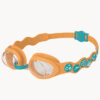
An infant-sized goggle with a push-button strap adjustment, so you can resize it quickly between swims rather than threading a buckle. It suits parents of toddlers in parent-and-child or early lessons who want a simple, small frame. The retailer listing does not detail the lens, so check it for anti-fog and UV information. Skip it once your child reliably puts their face in and swims short distances, because they will soon need a junior frame.
Learn-to-swim (roughly 3 to 6)
This is where fit problems peak. Kids are moving from playing to swimming proper, and a goggle that fogs or leaks every few metres sets them back. Both picks below are listed by the retailer for ages 6 to 14. They may suit older learn-to-swim children and smaller-faced kids at the top of this band, but younger children may still need an infant or toddler size. That is the suction test’s job to decide.
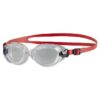
The retailer listing describes a soft, all-round frame with an anti-fog lens and easy strap adjustment, sized for juniors aged 6 to 14 or adults with slimmer faces. The soft frame suits children who complain that rigid goggles dig in, and it suits families who want a spare pair in every swim bag. Skip it if your child is closer to three than six and fails the suction test. A smaller infant frame will seal better.

The retailer listing describes a larger lens for a wider view, an easy-adjust nose bridge and a single head strap, aimed at juniors aged 6 to 14. The adjustable bridge helps when a fixed bridge leaves gaps at the inner corners, and the single strap is easy for kids to put on themselves. Skip it if your child is moving into squad training with dives, where a split strap usually holds position better.
Junior squad (roughly 7 to 12)
Once a child trains in a squad, goggles have to survive dives, tumble turns and several sessions a week. Look for a secure strap, an anti-fog lens and a gasket that stays comfortable for an hour or more. For swimmers who train indoors, a clear or lightly tinted lens is usually the practical choice (more on that below).
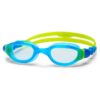
The retailer listing describes a hypo-allergenic liquid silicone soft-seal gasket, curved lenses for 180-degree peripheral vision, a silicone split-yoke strap and anti-fog and UV treatment, sized for ages 6 to 14. It also says the lens is designed for low light and indoor pools. That suits squad kids training under pool lights, and the split strap helps the goggle stay put through dives and turns. Skip it if your child has a very small face, since the curved lens is a wider frame than a basic learn-to-swim goggle.
Open water juniors
Junior triathletes and kids doing ocean swims or nipper-style open water sessions need a bit more. A wider field of view helps with sighting, UV protection matters in Australian sun, and a durable frame matters in sandy conditions.
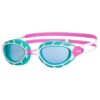
The retailer listing describes curved lenses with 180-degree peripheral vision, UV protection, anti-fog built into the lens rather than coated on, and soft silicone gaskets on a frame the brand calls Bio-Tech. The wider view suits juniors sighting buoys outdoors. The listing does not give an age range, so check it before you buy. Skip it for young learn-to-swim children, who will do better with a smaller, simpler frame.
Teens moving to adult sizing
Most junior goggles are labelled up to about 14, but plenty of teens outgrow them earlier, and some smaller teens stay in junior sizes for years. The signs it is time to move up are the cups pressing on the eye-socket bone, the strap at its loosest setting, or leaks at the outer edges.
Many adult goggles come in a regular and a “slim fit” or “small face” version, which is often the right step between junior and full adult sizing. Teens racing at carnivals may also want a lower-profile racing goggle. Fit it in training well before a meet so it does not shift on the dive. Browse adult options in the main goggles range and run the same suction test.
Comparison table
| Goggle | Best age band | Key specs (per the retailer listing) | Currently from |
|---|---|---|---|
| Speedo Infant Spot Goggle | Toddlers | Infant size, push-button strap adjustment; check the listing for lens details | $22.99 |
| Speedo Junior’s Futura Classic Goggles | Learn-to-swim (older) and junior | Soft frame, anti-fog lens, easy strap adjustment, ages 6 to 14 | $10.00 |
| Speedo Junior Jet 2.0 Goggle | Learn-to-swim (older) and junior | Larger lens, adjustable nose bridge, single strap, ages 6 to 14 | $18.00 |
| Zoggs Junior’s Phantom 2.0 Swimming Goggles | Junior squad | Liquid silicone gasket, curved 180-degree lens, split strap, anti-fog, UV, ages 6 to 14 | $19.99 |
| Zoggs Junior’s Predator Goggles | Open water juniors | Curved 180-degree lenses, UV protection, anti-fog in the lens, soft silicone gaskets | $34.99 |
We track prices daily, so the figures above reflect current listings. See the wider kids and junior swim gear section for caps and training aids.
Anti-fog care that actually works
Most junior goggles have an anti-fog treatment on the inside of the lens, and it wears off faster than most parents expect. These habits protect it:
- Never wipe or rub the inside of the lens, with fingers, towels or shirts.
- Rinse in cool fresh water after every swim. Chlorine and salt both degrade the treatment.
- Let goggles air-dry out of direct sun, not baking on a car dashboard or a hot pool deck.
- Store them in a case, not loose in a bag with keys and drink bottles.
Once the factory treatment fades, anti-fog sprays can help for a while. For a squad swimmer training several times a week, replacing goggles each season or two is a reasonable rule of thumb. Replace them sooner if the gasket cracks or the strap perishes.
UV, mirrored and clear lenses
For outdoor pools and open water, UV protection on the lens is worth having, especially across an Australian summer of training. Many junior goggles state UV protection on the listing. If it is not mentioned, check before you buy.
Mirrored and dark tinted lenses cut glare outdoors but make indoor pools look dim, which can make it harder to see the wall and the black line. For indoor training, clear or lightly tinted lenses are the practical choice. If your child trains both indoors and out, a second pair is cheaper than squinting through the wrong lens.
Frequently asked questions
What age can a child wear swimming goggles?
There is no fixed minimum age. Toddler goggles exist for children around two or three, and infant styles are made for even younger swimmers. Some swim schools prefer young children learn to be comfortable with water on their face before using goggles, so ask your programme. The better question is whether the goggle seals on your child’s face. If it passes the suction test and does not need a tight strap, it is a reasonable fit.
How do I know goggles fit my child?
Press the goggle onto their eyes without the strap. If it holds for a second or two on suction alone, the cups suit their face. Then check that the nose bridge sits flat with no gaps at the inner corners, and that the strap sits around the crown of the head without digging in. Red rings that last long after a swim usually mean the strap is too tight or the cups are the wrong size.
Why do my child’s goggles keep leaking?
The most common cause is a frame that does not match the face, which a tighter strap cannot fix. Other causes include a strap sitting too low on the back of the head, a nose bridge that is too wide, hair or a cap edge caught under the gasket, and a worn or cracked seal. Recheck the suction test, adjust the strap position, and replace goggles once the gasket starts to harden or split.
Clear or mirrored for an indoor pool?
Clear or lightly tinted. Mirrored and dark lenses are designed to cut glare outdoors, so under indoor lights they make the pool look darker and can make walls, lane ropes and the line harder to see. For kids who also train outdoors or swim in open water, a separate mirrored or tinted pair with UV protection is a sensible addition rather than a replacement.