

For most swimmers, a silicone swim cap is the best all-round choice. It lasts longer than latex, pulls hair less, and keeps a smooth shape in the water. Latex suits budget squad use and double-capping if you have no latex allergy, and lycra-style fabric caps suit young kids and anyone who finds rubber caps too tight, as long as you accept more drag and less hair protection.
The short answer: Choose silicone for daily training, a long hair swim cap if your hair is thick or past your shoulders, and a moulded dome only for racing.
- Everyday training: a moulded or shaped silicone swim cap, such as the Speedo Plain Moulded Silicone Cap or the Zoggs Silicone Swimming Cap.
- Long or thick hair: the Speedo Long Hair Cap, which is silicone with extra volume at the back.
- Kids who refuse rubber caps: a stretch fabric cap like the Zoggs Deluxe Stretch Cap.
- Racing: a thin, tight moulded cap such as the Speedo Fastskin Hiro Cap. Check approval status for your meet.
- Latex allergy: avoid latex caps entirely and avoid latex as an under-cap when double-capping.
Prices are in AUD, tracked daily from Australian retailers and shown as at the last update; check the retailer for the final price. Some links may earn us a commission at no cost to you. How we make money.
Silicone vs latex vs lycra: how the materials compare
All three materials keep hair off your face and out of the filters. They differ in grip, comfort, how long they last and how much water they drag. None of them keeps hair fully dry, whatever the packaging implies.
Silicone
Silicone is thicker and softer than latex. It stretches without gripping individual hairs as hard, so it is easier to pull on and off. It also resists tearing from chlorine and handling better than latex. Thickness and lifespan vary by brand and use, so treat any “lasts for years” claim with caution.
The trade-offs are price and grip. Silicone costs more than latex, and some swimmers find it slides up the head more easily. Caps with a textured or embossed inner surface help with this.
Latex
Latex is thin, light and tight. It grips well and is usually the lowest-cost rubber option, which is why many clubs hand them out in bulk for carnivals. The downsides are hair pull, a tendency to tear (especially with fingernails), and faster breakdown in chlorine and sun.
Latex is natural rubber. If you or your child has a latex allergy, skip latex caps completely and choose silicone or fabric instead. If a club cap is latex, ask whether a silicone version is available.
Lycra and stretch fabric
Fabric caps, usually spandex or a similar stretch knit, are the most comfortable. They don’t pull hair and suit kids and swimmers who dislike tight caps. They absorb water, though, so they add drag, slip more, and let more chlorinated water reach your hair. They suit lessons, aqua classes and relaxed laps more than squad sets.
Quick material summary
Durability: silicone first, fabric second (it doesn’t tear but does stretch out), latex last. Grip: latex first, then silicone, then fabric. Hair pull: fabric least, then silicone, then latex. Drag: latex and silicone are both smooth, and fabric creates the most. Price: latex is usually the lowest, silicone is moderate, and moulded racing caps cost the most. Exact figures vary by brand and use.
You can browse every material type in the swim caps hub, where we track prices daily.
Best everyday silicone caps
For four or more sessions a week, a plain silicone cap is the practical default. It lasts longer than latex and is easier on hair, and you avoid the latex allergy question entirely.
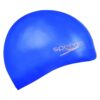
This is a moulded silicone cap. The retailer listing describes an ergonomic 3D shape intended to give a snug fit, and a smooth outline in the water. It suits adult lap and squad swimmers with short to medium hair who want a firm, structured cap. Skip it if your hair is long or thick, because a standard moulded shape leaves little room for a bun.

This is a silicone cap that the listing says is shaped for adult heads, with an embossed non-slip texture on the inner surface. That texture targets the main complaint about silicone, which is the cap creeping up during sets. It suits swimmers whose caps keep slipping. Skip it if you want a moulded, wrinkle-free dome for racing.
Long hair swim caps
Standard caps are cut for short to medium hair. If you force a thick plait or bun into one, it pops off mid-set or presses hard on your forehead. A long hair swim cap adds volume at the back so the hair sits inside the cap rather than stretching it.

The listing describes this cap as 100% silicone, with extra volume at the back for long, thick hair and seamed construction. It suits swimmers with shoulder-length or longer hair, braids or locs who train regularly. Skip it if your hair is short, because the spare volume can trap water and wrinkle, which adds drag.
Tie hair into a low bun or plait before capping. A high ponytail makes a lump that pushes the cap up. Wetting your hair first with fresh water also reduces how much chlorinated water it soaks up.
Stretch fabric (lycra-style) caps
Fabric caps make sense when comfort decides whether the cap goes on at all. This is often the case for young kids in lessons, and for adults with sensitive scalps.
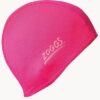
The listing describes a stretch spandex fabric cap in a one-size design, aimed at children who dislike how a silicone cap feels. It suits lesson-age kids and relaxed adult lap swimmers. Skip it for squad training or racing, because fabric holds water and adds drag. As the listing notes, it is not meant to keep hair dry.
Racing and dome caps
Racing caps are moulded into a dome so they sit wrinkle-free. Wrinkles and loose edges add drag, and a smooth dome keeps your head line clean through starts and turns. They are tighter and less comfortable than training caps, so most swimmers keep one for meets only.
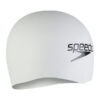
The listing describes a tight-fitting moulded design made from thinner material for a wrinkle-free fit, with a gloss interior for grip. It also states FINA approval. FINA is now World Aquatics, so confirm the cap on the current World Aquatics list and check your meet rules. It suits competitive swimmers at taper meets. Skip it for daily training, where the snug fit and cost are hard to justify.
Approval rules for caps can depend on the competition level. For club and school meets, check your own association’s rules rather than assuming a cap is required or permitted.
Double-capping
Many racers wear two caps. A thin latex cap goes on first, the goggle strap goes over it, and a silicone or moulded cap goes on top. The outer cap smooths the outline and holds the goggles in place during a dive start.
If you have a latex allergy, use a thin silicone cap as the under-cap instead. Practise double-capping in training before race day, because it changes how tight your goggles feel.
Kids swim caps
Children need a cap that fits a smaller head. An adult cap on a child slips back and lets water in, and the child ends up hating caps. Junior silicone caps solve the size problem while keeping silicone’s durability.
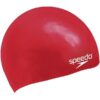
This is a junior-sized moulded silicone cap. The listing describes the same ergonomic 3D shape and snug fit as the adult version. It suits club kids moving into squad training who need a cap that lasts. Skip it for young children who resist tight caps, and start them in a fabric cap instead. Check the listing for the age range it fits.
For carnivals, many clubs supply latex caps in club or house colours. Tell the club about any latex allergy early so they can arrange a silicone or fabric alternative. Junior options are listed in the swim caps section alongside adult sizes.
Sizing and fit
Most caps come in one size per age group: adult, junior, and sometimes a long hair or large volume version. Head circumference varies more than sizing labels suggest. Check the size chart where the listing has one.
A good fit sits just above your eyebrows at the front and covers the tops of your ears or sits just over them. It should stay put through a few hundred metres without you adjusting it. If it creeps up, try a textured inner surface or a long hair cap if hair bulk is the cause. If it gives you a headache, size up or switch material.
Caring for your cap: talc, rinse, dry flat
How you look after a cap affects how long it lasts more than the brand does.
- Rinse in cool fresh water after every swim to remove chlorine or salt.
- Dry it flat or loosely hung, in the shade. Never leave it in a hot car or in direct sun.
- Dust latex caps with a little talc or cornflour once they are dry, so the surfaces don’t stick together and tear when you pull them apart.
- Don’t stuff a wet cap into a closed bag with your goggles and towel for hours.
- Put the cap on with flat palms rather than fingertips, and remove rings first. Fingernails cause most tears in latex.
Silicone tolerates neglect better than latex, but heat and long exposure to chlorine still break it down over time. Replacement intervals vary by brand and use.
Comparison table
| Cap | Material and key specs | Suits | Skip if | Currently from |
|---|---|---|---|---|
| Speedo Plain Moulded Silicone Swim Cap | Moulded silicone, 3D shaped, snug fit | Adult training, short to medium hair | You have long, thick hair | $10.00 |
| Zoggs Silicone Swimming Cap | Silicone, adult shape, embossed non-slip inner | Swimmers whose caps slip | You want a racing dome | $13.99 |
| Speedo Long Hair Cap | 100% silicone, extra volume, seamed | Long hair, braids, buns | Your hair is short | $19.99 |
| Zoggs Deluxe Stretch Cap | Spandex fabric, one size | Kids in lessons, relaxed laps | You do squad training or racing | $11.99 |
| Speedo Fastskin Hiro Cap | Thin moulded racing cap, gloss interior, listing states FINA approval | Competitive meets | You only train | $70.00 |
| Speedo Plain Moulded Silicone Junior | Junior moulded silicone, 3D shaped | Club kids moving into squad | Your child hates tight caps | $17.00 |
Current prices across all retailers are listed on the swim caps page.
Frequently asked questions
Is silicone better than latex?
For daily training, usually yes. A silicone swim cap is more durable, pulls less hair, and avoids latex allergy problems. A latex swim cap is thinner, grips tightly and usually costs less, so it suits carnivals, occasional swimmers and the under-cap when double-capping. If you have any latex allergy, choose silicone. How long either lasts varies by brand and how well you rinse and dry it.
How do I stop a cap slipping off?
First check the cap fits your head and hair volume. Long hair in a standard cap is the usual cause, so try a long hair cap. Tie hair in a low bun, not a high ponytail. A textured or embossed inner surface also grips better. Pull the cap down so the front edge sits just above your eyebrows, and keep your hair and the cap free of conditioner before you swim.
Can I wear a swim cap with long hair?
Yes. A long hair swim cap has extra volume at the back to hold a bun, plait or braids without stretching. Wet your hair with fresh water first, tie it low, and put the cap on from the back of your head forwards, tucking stray hair in as you go. Expect some water to get in. Caps reduce chlorine contact but don’t keep hair dry.
How do I make a swim cap last?
Rinse it in cool fresh water after every swim, then dry it flat or loosely hung in the shade. Keep it out of hot cars and direct sun. Dust latex caps with talc once dry so they don’t stick to themselves. Put caps on with flat palms rather than fingernails, and don’t leave a wet cap sealed in your bag. Lifespan varies by brand and use.