

A typical squad kit list covers fins, a kickboard, a pull buoy, paddles, a centre snorkel, a mesh bag and a drink bottle. Most clubs don’t need all of it on day one. Ask your coach what the programme uses, then buy fins and a pull buoy first, since those come out most often.
The short answer: Start with what your coach names. Fins and a pull buoy cover most sessions. Add paddles and a snorkel once your stroke and shoulders are ready.
- Short-blade fins train kick tempo and technique. Long-blade fins add propulsion and work ankle flexibility.
- Fins should fit snugly, with no pinching and no heel slipping. Never buy a size up “to grow into”.
- A pull buoy is usually more useful than a kickboard. Many pools lend kickboards.
- Start with small or finger paddles. Large paddles load the shoulder.
- Rinse everything in fresh water after each session and dry it out of the sun.
Prices are in AUD, tracked daily from Australian retailers and shown as at the last update; check the retailer for the final price. Some links may earn us a commission at no cost to you. How we make money.
What coaches usually ask for
Kit lists vary by club, squad level and even by coach within the same club. Some programmes want short fins only, because long fins take up lane space. Others write long-fin sets into every session for younger swimmers.
Check with the coach before buying anything. Ask three things: which fin length, whether paddles are used at this level, and whether the pool supplies kickboards and pull buoys. That one conversation stops you buying gear that sits in the cupboard.
For a full overview of the categories, start at the training equipment hub.
Swim fins: short blade vs long blade
Fins are the item coaches name most often. The blade length changes what the fin trains, so the two types are not interchangeable.
Short-blade fins
Short blades keep your kick close to race tempo. They add some propulsion without letting you slow the leg action down. Coaches use them for drill work, sprint kick and longer freestyle sets where they want good body position without a lazy kick.
They suit squad swimmers from about intermediate level up, masters swimmers and triathletes working on kick rhythm. Skip them if your ankles are very stiff and you’re new to kick sets. You may get more from a long blade first.
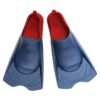
An adult unisex short-blade training fin. It suits swimmers whose coach specifies short fins for tempo and drill sets. Skip it if your programme asks for long blades. Check the listing for the size range and whether the foot pocket is closed or open-heel.
Long-blade fins
Long blades give more propulsion per kick and put a bigger stretch through the ankle. That makes them common for younger swimmers, newer adult squad members and anyone building ankle flexibility. They also help less confident swimmers hold speed while learning drills.
The trade-off is tempo: a long blade encourages a slower, bigger kick. Skip long blades if your coach wants race-pace kick work. Also skip them if your lane is crowded and the coach has said no to them.
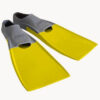
An adult unisex long-blade swim fin, aimed at propulsion and ankle mobility work. It suits newer squad swimmers and kick-focused sessions. Skip it if you need a short fin for tempo work. Check the listing for size bands and foot pocket style.
How to size swim fins
Fins are usually sold in shoe-size bands, and how those bands map to Australian, UK, US or EU sizes varies by brand. Check the brand’s size chart rather than assuming. If you fall between two bands, the right choice depends on the foot pocket. A snug closed pocket rubs if it’s too small. A loose one slips off at the push-off.
The fit you want is snug, with no pinching at the toes and no gap at the heel. Fin socks can help with rubbing on the top of the foot. For club kids, buy for the foot they have now. Oversized fins cause blisters and come off on the wall. The same sizing approach applies to Speedo fins or any other brand. You can see the current range on the fins hub.
Kickboard and pull buoy
These two isolate one half of the stroke. A kickboard holds your upper body up so the legs do the work. A pull buoy floats your legs so the arms do the work.
Many pools have a stack of kickboards on deck, so a personal one is lower priority. A pull buoy gets used in most squad sessions, and plenty of pools don’t lend them.
Kickboard
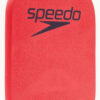
This kickboard is made from EVA foam, as the name says. The retailer listing describes it as adding buoyancy to support your upper body, so the lower body works on its own for kick technique and leg strength. It suits swimmers whose pool doesn’t supply boards, and club kids who want their own. Skip it if your pool provides kickboards and you’re short on bag space.
Pull buoy
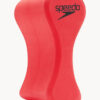
The retailer listing describes this pull buoy as sitting between your legs to float them. That isolates the upper body, so your arms and shoulders carry the load. It suits anyone doing pull sets, including triathletes building upper-body endurance. Skip it if your shoulders are currently sore. Pull sets add load there.
Both items are listed on the kickboards and pull buoys hub.
Paddles: finger vs hand
Paddles add surface area to your hand, so each stroke moves more water. That builds strength and gives feedback on your catch. It also loads the shoulder.
Finger paddles are small and cover the fingers. They give catch feedback with less added load, so they suit younger swimmers and anyone returning from a shoulder niggle. Hand paddles cover the palm and add more resistance. Introduce them gradually, and stop if you feel shoulder pain. If you have a history of shoulder problems, check with your coach or a physio before using them.
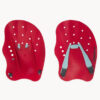
A hand paddle made from polypropylene with silicone straps and flow holes. The listing gives three sizes: small (18 × 13 cm), medium (20 × 15 cm) and large (22 × 17 cm), each with a different strap colour. It suits swimmers already comfortable with pull sets. The retailer listing advises small or medium for maintaining strength and medium or large for building it. Skip it if you’re new to paddles or carrying a shoulder issue. Start small or with finger paddles.
More options are on the paddles hub.
Centre snorkel
A centre-mount snorkel runs up the front of your face, so you can breathe without turning your head. Coaches use it for body position, head alignment and stroke drills. With the breath taken out of the stroke, you can focus on what your arms and hips are doing.
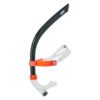
A centre-line training snorkel. The retailer listing says it lets you keep your head still and work on body position and stroke without turning to breathe. It suits freestyle technique work and triathletes refining alignment. Skip it if your programme doesn’t use snorkel sets. Check the listing for mouthpiece and head-strap details.
Mesh bag and drink bottle
A mesh drawstring or backpack-style bag keeps the kit together on deck and lets it drain and air between sessions. Pick one big enough for fins, a pull buoy and paddles. Add a kickboard if you carry your own.
Bring a drink bottle to every session. Plain water suits most squad sessions. Label the bag and bottle, especially for club kids, because pool decks collect a lot of identical gear.
Care and rinse
Chlorine and salt shorten the life of rubber, silicone and foam. After each session, rinse everything in cool fresh water. Then hang it to dry in the shade.
Don’t leave gear zipped in a wet bag or in a hot car. Heat and UV can warp fins and break down straps. Check paddle straps and snorkel mouthpieces regularly, and replace straps when they crack or lose stretch.
Squad kit-list checklist
| Item | What it trains | Suits / skip | Currently from |
|---|---|---|---|
| Short-blade fins (Zoggs Short Blade Remix Fins) | Kick tempo, technique | Suits tempo and drill work; skip if coach asks for long blades. Check the listing for size bands. | $49.99 |
| Long-blade fins (Zoggs Long Blade Swim Fins) | Propulsion, ankle flexibility | Suits newer squad swimmers; skip for race-pace kick. Check the listing for size bands. | $39.99 |
| Kickboard (Speedo Eva Kickboard) | Isolated kick | EVA foam; listing says it supports the upper body. Skip if your pool lends boards. | $44.99 |
| Pull buoy (Speedo Elite Pullbuoy) | Arm pull, upper body | Sits between the legs; floats them so arms carry the load. Skip with sore shoulders. | $39.95 |
| Hand paddles (Speedo Tech Paddle) | Catch, strength | Polypropylene, silicone straps, sizes S/M/L. Skip if new to paddles. | $35.00 |
| Centre snorkel (Zoggs Centre Line Snorkel) | Body position, head alignment | Breathe without turning the head. Skip if no snorkel sets. | $39.99 |
| Mesh bag | Carry and drain kit | Everyone | — |
| Drink bottle | Hydration | Everyone | — |
We track these prices daily. The “Currently from” column shows the lowest current price at our retailers.
Frequently asked questions
Short blade or long blade fins?
It depends on what your coach wants trained. Short blades keep kick tempo close to race pace and suit technique and sprint work. Long blades give more propulsion and a bigger ankle stretch, which helps newer swimmers and ankle flexibility. Many squads specify one type, so ask before buying. If you train across several groups, some swimmers end up owning both.
Do I need a pull buoy and paddles?
A pull buoy is used in most squad programmes, so it’s usually worth owning. Paddles depend on your level and your shoulders. Many coaches introduce them only once the stroke is solid. Start with finger or small paddles, build up gradually, and stop if you feel shoulder pain. Check with your coach before adding paddles to your bag.
What size fins should I buy?
Buy by the brand’s size chart, because shoe-size bands differ between brands. Aim for a snug fit with no toe pinching and no heel slipping. Don’t size up for children to grow into. Loose fins cause blisters and slip off at turns. If a fin rubs on the top of the foot, fin socks can help.
What does my squad coach expect me to bring?
It varies by club and squad level. A common list is fins, a pull buoy, a kickboard if the pool doesn’t supply one, a drink bottle and a mesh bag. Paddles and a centre snorkel usually come later. Ask your coach which fin length they want and whether the pool lends equipment, then buy only what’s on their list.