

A tech suit is a compressive racing suit built to reduce drag and limit water uptake for competition. For most sanctioned meets it must be World Aquatics approved and cut to the right length for your event category. This guide explains how approval works, how to choose a cut and price tier, and how to make a suit last.
The short answer: Buy a tech suit for championship racing, not training. Check the approval mark and your meet rules before you pay.
- Check for the World Aquatics approval mark on the suit and confirm the model on the current World Aquatics approved list.
- Kneeskins are the standard cut for women’s events and jammers for men’s. Junior and age-group rules can differ, so check your association.
- Entry suits with sewn seams and lighter compression suit developing racers. Flagship suits with bonded, multi-layer construction suit swimmers chasing finals and qualifying times.
- Expect a tight fit that takes 15-30 minutes to put on, and a limited number of wears at full performance.
- Skip a tech suit for fast-growing kids, learners and anyone who mainly trains.
Prices are in AUD, tracked daily from Australian retailers and shown as at the last update; check the retailer for the final price. Some links may earn us a commission at no cost to you. How we make money.
What a tech suit does
A tech suit is not just a tighter training suit. Four design features separate racing swimwear from everyday lap gear.
Compression
Compressive fabric and inner panels hold your hips and legs in a firmer, more streamlined position. Compression levels range from “low” in entry suits to “moderate” or higher in flagship models. More compression feels more restrictive, especially across the hips.
Water repellence
Most tech suits use a water-repellent finish. The aim is to stop the fabric soaking up water and adding weight and drag as a race goes on. This finish wears down with use and with poor care.
Seams
Entry suits often use sewn flatlock seams. Higher-tier suits use bonded seams, which are glued or taped rather than stitched. Bonded seams sit flatter and give a smoother surface, but they need gentler handling.
Reduced drag
Compression, a smooth surface and less water uptake combine to reduce drag. Some flagship suits add textured fabric zones aimed at drag reduction. The gain is real but small, so it matters most in a taper meet, when everything else is already in place.
World Aquatics approval explained
World Aquatics, formerly called FINA, sets the swimwear rules for elite competition. Many national bodies and meets adopt them. That is why you will still see “FINA approved swimwear” on older listings and suit labels.
The approval mark and the approved list
Approved racing suits carry a World Aquatics approval mark, usually a printed or heat-applied logo near the hip or lower back. World Aquatics also keeps a public list of approved models.
Before you buy, check the mark on the suit itself and look up the model on the current list. A retailer listing that says “approved” is a useful starting point, but the official list is the reference meet officials use.
Suit length by event category
In general, suits for men’s events must not extend above the navel or below the knee. That is why jammers are the standard men’s racing cut. Suits for women’s events must not cover the neck, extend past the shoulders or go below the knee. That is why women race in kneeskins.
Age-group and junior events can have their own restrictions on tech suits, and these vary by association and meet. Check your club, state association or meet information pack before buying a suit for a younger swimmer.
Wearing a non-approved suit at a sanctioned meet
If you race in a suit that is not approved, or one that breaks the length rules, you can be disqualified. Officials may check suits on deck or in the marshalling area. Read the meet rules before race day, especially at championship meets where enforcement is typically stricter.
Fit: tighter than you expect
A tech suit should feel noticeably tighter than your training suit. Allow 15-30 minutes to put one on, longer for a kneeskin. Roll the fabric up gradually, use the pads of your fingers rather than your nails, and never pull at the seams.
A suit is too small if it restricts your breathing, cuts in hard at the shoulders or leaves you unable to reach full extension. Use the brand’s size chart and get fitted in store if you can.
The Speedo listings in this guide note that Fastskin suits cannot be returned and that Speedo Australia asks buyers to book a fitting through a specialist retailer. Take that seriously: a wrong size is an expensive mistake.
Open back vs closed back
Open-back kneeskins use thinner straps and leave the upper back clear. They allow more shoulder freedom and are usually easier to put on.
Closed-back kneeskins give more coverage and hold the torso more firmly. Some listings note they may suit swimmers with straighter backs. Neither style is faster for everyone, so choose on comfort, stroke and fit.
Price tiers and picks
Across the racing suits we track, prices run from roughly $130 for an entry jammer to around $1,000 for a flagship kneeskin. Here is what each tier offers in spec terms.
Entry tech jammer
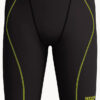
The retailer listing describes a knitted fabric of 79% recycled nylon and 21% Xtra Life elastane, with flatlock seams and dual-layer compression panels through the legs. It also notes a soft waistband with a gripper and says the suit is World Aquatics approved. It suits male club and masters swimmers moving into their first race suit. Skip it if you are racing finals where bonded-seam construction matters to you.
Entry kneeskin
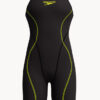
This suit comes in both women’s and teens sizing. The listing describes an open back with low-profile straps, a round neckline and sewn dual-layer inner panels that give low-level compression at the core and legs. It uses the same 79/21 recycled nylon and elastane blend, and the listing says it is World Aquatics approved. It suits teenage and developing racers who want shoulder freedom. Check your association’s age-group rules first, and skip it if you want firmer compression.
Mid-range jammer

This Speedo LZR jammer uses a compressive woven fabric of 75% nylon and 25% spandex. The listing describes bonded dual-layer inner panels, leg grippers, a silicone-gripper waistband and a water-repellent coating, and pitches the compression as moderate but less restrictive. The listing says FINA approved, so confirm the model on the current World Aquatics list. It suits swimmers racing long meets with several swims. Skip it if you only race a handful of times a year and an entry suit covers you.
Upper-mid jammer

The listing describes a lightweight polyamide/elastane fabric with moderate compression, flat bonded seams, a compressive inner leg seam and a long-lasting water-repellent finish. It uses a regular waist, which the listing suggests breaststroke and IM swimmers may prefer for flexibility. The listing says it is fully approved by FINA, so check the current World Aquatics list. Skip it if a high-waist cut suits your stroke better.
Flagship jammer

The listing describes triple-fabric construction with bonded seams, compressive dual layers, textured fabric zones aimed at drag reduction and precision leg grippers. The fabric is 73% polyamide and 27% elastane, and the listing says it is World Aquatics approved. It suits national-level or qualifying-time chasers who race it only at taper meets. Skip it if you race weekly, because a flagship suit gives a limited number of wears at its best.
Flagship kneeskin (closed back)
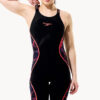
This is a closed-back kneeskin with a round neckline, precision straps, compressive dual layers and triple-fabric construction with bonded seams. The fabric is 73% polyamide and 27% elastane, and the listing says it is World Aquatics approved. It notes the closed back may suit swimmers with straighter backs. It suits experienced racers at championship level. Skip it if you are still growing, new to tech suits or prefer the shoulder freedom of an open back.
Comparison table
| Suit | Cut | Key specs (per retailer listing) | Currently from |
|---|---|---|---|
| Speedo Men’s Fastskin Hyperspark Jammer | Jammer | 79% recycled nylon/21% elastane; flatlock seams; dual-layer leg panels; listed as World Aquatics approved | $129.99 |
| Speedo Women’s/Teens Fastskin Hyperspark Open Back Kneeskin | Open-back kneeskin | Women’s and teens sizing; low-level core and leg compression; 79/21 blend; listed as World Aquatics approved | $229.99 |
| Speedo Men’s Fastskin LZR Ignite Jammer | Jammer | 75% nylon/25% spandex woven fabric; bonded inner panels; water-repellent coating; listed as FINA approved | $299.99 |
| Speedo Men’s LZR Valor 2.0 Jammer | Regular-waist jammer | Moderate compression; flat bonded seams; compressive inner leg seam; listed as FINA approved | $489.99 |
| Speedo Men’s LZR Intent 2.0 Jammer | Jammer | Triple fabric with bonded seams; textured zones; 73% polyamide/27% elastane; listed as World Aquatics approved | $749.99 |
| Speedo Fastskin LZR Intent 2.0 Closed Back Kneeskin | Closed-back kneeskin | Triple fabric with bonded seams; precision straps; 73/27 blend; listed as World Aquatics approved | $1019.99 |
Care and durability
Tech suits are built for performance, not longevity. Expect a limited number of wears before compression and water repellence drop off. Heavy use, chlorine and rough handling all shorten that window.
- Rinse in cold fresh water straight after each wear.
- Do not wring, machine wash or tumble dry the suit. Press out the water gently and dry it flat in the shade.
- Keep it away from rough pool edges, benches and velcro.
- Wear a training suit for warm-up and swim-down, and change into the tech suit only for your races.
When to buy and when not to
Buy a few weeks before your target meet. That gives you time to practise putting the suit on and to do one race-pace session in it.
A tech suit makes sense when you are racing sanctioned meets, your technique and fitness are already solid, and small time margins matter.
Hold off if your swimmer is growing quickly, is not yet racing at sanctioned meets, or would gain more from extra squad sessions. A well-fitted training suit is the better buy for most of the year. You can browse every cut on our racing suits hub, where we list current prices updated daily.
Frequently asked questions
Is my suit World Aquatics approved?
Look for the World Aquatics approval mark on the suit, usually near the hip or lower back. Then find the exact model on the current World Aquatics approved list. Older suits may carry a FINA mark from before the name change. A retailer saying “approved” is helpful, but the official list is what officials rely on. If you cannot find the model, ask your meet referee or club before race day.
How many races does a tech suit last?
There is no fixed number. A tech suit gives a limited number of wears at full performance before compression and water repellence fade. Lighter entry suits and heavily bonded flagship suits wear differently, and care makes a big difference. Wear it only for races, rinse it after every use and dry it flat in the shade. When it starts to feel loose or holds water, move it to minor meets.
Do tech suits make you faster?
Compression, a smoother surface and less water uptake can reduce drag and help your body position, which can take small amounts off a race time. The gain is modest compared with training, technique, starts, turns and taper. A tech suit helps most when those are already in place. For a newer swimmer, extra coached sessions usually do more than an expensive suit.
Open back or closed back?
Open-back kneeskins give more shoulder freedom and are usually easier to put on, which suits many butterfly and freestyle swimmers. Closed-back kneeskins give more coverage and a firmer hold through the torso. Some listings suggest they suit swimmers with straighter backs. Neither style is automatically faster. Try both if you can, and choose the one that lets you reach full extension comfortably.
Can I wear a tech suit in training?
You can, but it will use up the suit’s limited wears quickly. Chlorine exposure and repeated stretching wear down compression and water repellence. Most coaches suggest one race-pace session in a new suit to check fit, then keeping it for competition only. For daily laps, a durable training suit is the better choice. It also means your tech suit is in good shape for your target meet.