

Chlorine-resistant swimwear lasts longer because it is made mostly or entirely from polyester, including PBT, instead of the nylon-elastane blends used in softer suits. If you swim more than two or three times a week, a polyester training suit plus a simple rinse-and-dry routine will usually outlast several nylon suits. Here is how the fabrics differ, what fails first and how to work out cost per swim.
The short answer: buy polyester or PBT-blend training suits for regular pool work and look after them properly.
- Nylon-elastane feels soft and stretchy but fades and sags in chlorinated water. Keep it for occasional swims.
- Polyester and PBT blends, such as Speedo’s Endurance+ range, hold shape and colour far longer under heavy chlorine exposure.
- Rinse in cool fresh water after every swim. Never wring, tumble dry or use hot water.
- Rotate two suits if you train four or more times a week.
- Judge value by cost per swim, not sticker price.
Prices are in AUD, tracked daily from Australian retailers and shown as at the last update; check the retailer for the final price. Some links may earn us a commission at no cost to you. How we make money.
Why chlorine damages swimwear
Pool chlorine is an oxidiser. It slowly breaks down elastane (also sold as spandex or Lycra), the fibre that gives a suit its stretch and snap-back. Once elastane degrades, the suit loses shape, the fabric thins and colours fade.
Heat speeds the process up, and so do sweat, sunscreen and time spent sitting wet. That is why the same suit can last very different lengths of time for two swimmers.
Fabrics explained
Nylon-elastane: comfortable, but short-lived in chlorine
Most fashion and many entry-level swimsuits use nylon (polyamide) with a high percentage of elastane. The result is soft, very stretchy and easy to pull on.
The downside is durability. In a chlorinated pool, nylon-elastane suits tend to fade, bag at the seat and lose elastic recovery. Expect this soonest if you train in them most days.
Polyester and PBT blends: built for chlorine
Chlorine-resistant swimsuits use polyester, often blended with PBT (polybutylene terephthalate). PBT is a polyester with some natural stretch, so the suit can fit without relying on elastane.
Speedo’s Endurance+ swimwear is one example. The retailer listing for the Endurance+ 5cm brief gives 53% recycled polyester and 47% PBT polyester. Other brands use their own names for similar blends, so check the composition on the label or listing rather than the marketing name.
Why polyester suits feel different
Expect a polyester suit to feel firmer and less silky than nylon, and slightly harder to pull on. It does not stretch as far, so some swimmers find their usual size feels snug at first.
Check the brand’s size chart before you buy rather than sizing up out of habit. A suit that is too loose will drag and wear unevenly. The firmer feel is also part of why it keeps its shape for longer.
What wears first
Even chlorine-resistant fabric wears out eventually. Knowing where to look helps you replace a suit before it fails mid-session.
- The seat. Pool edges, concrete benches and starting blocks rub the fabric. It pills, thins and eventually goes see-through when it stretches.
- Bust lining and shelf. Internal linings and shelf bras often lose support before the outer fabric looks worn.
- Elastic. Leg openings, straps and waistbands can go wavy or loose. On briefs and jammers, check that the drawcord still holds the waist.
- Straps. Thin straps can stretch or fray where they meet the back.
Hold the suit up to the light and stretch the seat gently. If you can see through it, it is time to retire the suit to training-only or replace it.
Swim hours and cost per swim
Chlorine damage is cumulative, so what matters is total hours in the water, not months owned. Two 30-minute lap sessions a week is a very different load from a squad swimmer doing eight or nine sessions.
Rule of thumb, not a guarantee: a nylon-elastane suit used several times a week often starts to sag or fade within a few months. A polyester or PBT suit under the same load and with good care commonly lasts several times longer, often many months and sometimes more than a year. Pool chemistry, water temperature, fit and care all move these numbers.
To work out cost per swim, divide the price by the number of sessions you get before the suit stops doing its job. A polyester suit that costs a bit more but lasts three times as long costs far less per swim. For low-volume swimmers the gap shrinks, and comfort may reasonably win.
Care routine that extends suit life
- Rinse straight away in cool fresh water, ideally at the pool showers, to flush out chlorine.
- Avoid hot water. Spas, hot showers and hot washes speed up fibre breakdown.
- Never wring. Roll the suit in a towel and press out the water instead.
- Never tumble dry. Dry it flat or hanging in the shade, not in direct sun.
- Don’t soak it in chlorine. Avoid lounging in the pool or leaving the suit balled up wet in your bag for hours.
- Hand wash occasionally with a mild detergent or a swimwear wash, then rinse well.
- Rotate two suits. If you train most days, alternating lets each suit dry fully and its elastic recover between sessions.
Chlorine-resistant picks from the catalogue
All of the suits below are training suits from our training swimwear range. We track their prices daily.
Women’s training one-piece

This is a classic Endurance+ training one-piece. The retailer listing says it is made from 50% recycled materials, dries quickly and is fully chlorine resistant, with the same cut as the previous Medalist. It suits squad and masters swimmers who want a no-fuss daily training suit. Skip it if you want built-in cups or more coverage, and look at the legsuit or the Poolproof option below. More choices are in women’s one-pieces.
Men’s training briefs
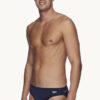
This brief has a 5cm leg, a fully lined front, an elasticated waistband and a drawstring. The fabric is 53% recycled polyester and 47% PBT polyester. The retailer listing also claims high chlorine and fade resistance. It suits lap and squad swimmers who prefer a short leg for training. Skip it if you want more coverage, and consider the 7cm brief or a jammer instead.

This brief has a slightly longer 7cm leg and a drawstring waist. The retailer listing describes it as quick drying, fully chlorine resistant and made from 50% recycled materials. It suits swimmers who want a little more coverage than a 5cm brief without moving to a jammer. Skip it if you prefer a very short leg or a longer-leg suit.
Women’s legsuit

This legsuit gives extra coverage through the thigh and has an inner bust shelf liner. The retailer listing says it is made from 50% recycled materials and is fully chlorine resistant. It suits masters and fitness swimmers who want more coverage for daily training. Skip it if you prefer a standard-leg one-piece for a freer feel at the hips. More options are in legsuits and modest swimwear.
Junior jammer

This is a junior jammer with a streamlined cut and an internal drawcord waist, made from 50% recycled materials. The retailer listing says it is chlorine resistant and quick drying. It suits club kids doing lessons and regular squad sessions, where nylon suits often wear out fast. Skip it if your swimmer prefers briefs, and size for a snug fit, not room to grow, because a loose jammer drags. See jammers for more.
Supportive one-piece
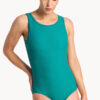
This is a full-coverage one-piece. It has a 100% PBT shell and 100% polyester lining, fixed soft cups, an elastic shelf bra, wide fixed straps, a high round neckline and mastectomy pockets. The listing says it is best suited to A to D cups. It suits lap and aqua-fitness swimmers who want bust support and coverage. Skip it if you need a racer back for fast squad training or sit outside that cup range.
Comparison table
| Product | Type | Key specs (per listing) | Suits | Currently from |
|---|---|---|---|---|
| Speedo Women’s Endurance+ Medalist | One-piece | 50% recycled materials, quick dry, listed as chlorine resistant | Daily squad and masters training | $50.00 |
| Speedo Men’s Endurance+ 5cm Brief | Brief | 53% recycled polyester / 47% PBT, 5cm leg, lined front, drawstring | Short-leg training | $25.00 |
| Speedo Men’s Endurance+ 7cm Brief | Brief | 7cm leg, drawstring, 50% recycled materials | A little more coverage | $30.00 |
| Speedo Women’s Endurance+ Legsuit | Legsuit | Inner bust shelf liner, legsuit cut, 50% recycled materials | Coverage for daily training | $60.00 |
| Speedo Boys Endurance+ Jammer | Junior jammer | Internal drawcord, streamlined cut, 50% recycled materials | Club kids in lessons and squad | $35.00 |
| Poolproof Barbados Scoop Back One Piece | One-piece | 100% PBT shell, soft cups, shelf bra, mastectomy pockets | Support and full coverage | $129.95 |
Frequently asked questions
How long should a chlorine-resistant swimsuit last?
There is no fixed lifespan, because total hours in chlorinated water matter more than months owned. As a rule of thumb, a polyester or PBT suit with good care often lasts several times longer than a nylon-elastane suit under the same training load. That can be many months, sometimes more than a year. Heavy squad volume, warm pools, poor rinsing and rough pool edges all shorten it.
Is polyester better than nylon for swimming?
For regular pool training, yes. Polyester and PBT blends resist chlorine, hold their shape and keep their colour much longer. Nylon-elastane feels softer and stretchier and suits occasional swimmers or open water, where chlorine is not a factor. The trade-off is feel: polyester is firmer and can seem snug at first, so check the size chart carefully.
Should I rinse after the pool?
Yes, every time. A quick rinse in cool fresh water removes most of the chlorine before it keeps working on the fibres in your bag. Then press the water out in a towel rather than wringing, and dry the suit in the shade. Skipping the rinse is one of the most common reasons suits wear out early, even chlorine-resistant ones.
Why does my swimsuit go see-through?
Usually the fabric has thinned, most often at the seat. Chlorine breaks down elastane, and rubbing on pool edges, benches and blocks wears the surface away. Once the fibres thin, the fabric opens up when stretched, especially when wet. Hold the suit to the light and stretch it gently. If you can see through it, replace it or keep it for training under a second layer.