

Jammers are fitted, close-cut swim shorts that run from the waist to just above the knee. They are the default training suit in most Australian squads and masters groups. This guide covers fit, fabric, leg length, sizing and care so you can buy mens swim jammers or boys jammers that last a full training season.
The short answer: For pool training, buy a chlorine-resistant jammer in a polyester-heavy fabric, sized snug but not restrictive, with a drawcord.
- Swim five or more sessions a week? Choose polyester or PBT-based fabric over standard nylon-elastane.
- Prefer more freedom at the knee? A “mid” jammer (around 39cm leg on some adult styles) sits higher on the thigh.
- For club kids, check the fabric is rated for chlorinated pools. Some junior jammers are not.
- A training jammer is not a tech race suit. Racing jammers are a separate product with their own rules.
Prices are in AUD, tracked daily from Australian retailers and shown as at the last update; check the retailer for the final price. Some links may earn us a commission at no cost to you. How we make money.
What a jammer is
A jammer is a tight-fitting swim short with a leg that ends above the knee. It covers more thigh than a brief or trunk and stays put during dives, turns and kick sets. Most have a drawcord at the waist and a lined front.
Two broad lengths are common. A full jammer finishes just above the knee. A “mid” or “midi” jammer stops higher on the thigh, which some swimmers find easier for breaststroke kick and for getting in and out of the pool.
Jammer vs brief vs trunk
All three are legitimate training suits. The difference is coverage and feel in the water.
- Brief: minimal coverage and the least fabric to drag. Traditional in many squads and the easiest to dry. Skip it if you prefer more coverage or want a suit that feels like your race suit.
- Trunk (square-leg): a short leg that ends at the top of the thigh. A middle ground for lap swimmers and masters who want coverage without a longer leg.
- Jammer: the most coverage and the closest match to the shape of a racing jammer. Skip it if you dislike fabric on the thigh or swim mostly breaststroke and find the leg restrictive.
If you are still deciding between shorter cuts, browse briefs and trunks alongside jammers.
Leg length and style names
Brands use names like “mid”, “midi”, “full” and “long” with no shared standard. Adult jammer leg lengths, measured on the inseam, are roughly in the high-30s to mid-40s of centimetres. Treat that as a rule of thumb, because it varies by brand and by size within a range.
A shorter mid length suits swimmers who want freedom at the knee, triathletes doing pool sessions and anyone between a trunk and a jammer. A longer leg suits swimmers who want their training suit to feel like a racing jammer. Junior legs are much shorter. One boys midi in this guide lists 25cm.
When a listing gives a leg length in centimetres, check it against a pair of shorts you already own. That is more reliable than the style name.
Fabric: polyester and PBT vs nylon-elastane
Fabric decides how long a jammer lasts, more than any other spec. Chlorine breaks down elastane (spandex) over time, which is why a cheap suit goes baggy and thin within months of daily squad use.
Polyester and PBT-based fabrics
High-polyester fabrics, including those using PBT (a stretchier polyester), are the usual choice for chlorine resistance. They hold shape and colour well in heavily treated pools. The trade-off is a firmer, less silky feel and a little less stretch when you pull the suit on.
Nylon-elastane fabrics
Nylon blends with elastane feel softer and stretchier. Standard elastane wears faster in chlorine, though some brands now use chlorine-resistant elastane yarns to close the gap. These fabrics suit swimmers who train a few times a week and value comfort. Daily squad swimmers usually get more life from polyester.
Brand fabric names (Endurance+, EnduraFlex, Ecolast, C-Infinity and others) tell you which family a fabric belongs to. Read the composition on the listing as well as the name.
Drawcord, fit and sizing
A training jammer should feel snug at the waist and thigh with no gaps or sagging when you push off the wall. It should not dig in or leave deep marks. Do not size down the way some swimmers do for race suits. Training suits are built for comfort over long sessions.
The drawcord does the real work in holding the suit up during dives and fast turns. An internal drawcord sits flat and is less likely to fray or snag. Always tie it before you swim, even if the waist feels tight on dry land, because fabric relaxes slightly when wet.
Sizing systems vary between brands, so check each brand’s size chart against your waist measurement rather than assuming you match a size you wear in another brand. Front lining is standard on most jammers. Some listings specify a triangle or pouch lining.
Adult training jammers
These are everyday squad suits: chlorine-resistant fabric, a drawcord and a full jammer leg. You can find the full range in our jammers hub.
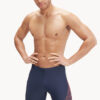
The Medley Logo Jammer is a nylon-based training jammer. The listing describes EnduraFlex fabric with CREORA HighClo, a chlorine-resistant elastane, and says it holds up better than standard swimwear fabric. It has a drawstring waist and integral front support. It suits swimmers who want a softer, stretchier feel for regular training. If you train daily in a heavily chlorinated pool and want maximum fabric life, skip it in favour of a polyester option.

The Hyperboom Splice Jammer uses Speedo’s Endurance+ fabric. The listing describes it as polyester, made from recycled post-consumer yarn, chlorine-resistant and quick-drying. It has a drawstring waist and integral support. It suits high-volume squad and masters swimmers who put durability ahead of softness. If you swim only occasionally and prefer a stretchier nylon feel, skip it.
Fast-training and mid-length jammers
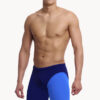
The Pressure Point Fast Training Jammer is made from 100% recycled polyester (Eco C-Infinity). It has an internal drawcord, a lined front pouch, flatlock stitching and wide elastic leg openings. “Fast training” here means a training suit with a sleek cut, not a World Aquatics-approved race suit. It suits swimmers who want a durable polyester jammer for hard sets. If you need a suit for championship racing, skip it and look at a dedicated racing jammer.
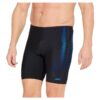
The Extender Mid Jammer has a 39cm leg length and triangle front lining, made from Zoggs’ Ecolast+ fabric. The listing calls it fully chlorine resistant and mentions the Zoggs Lifetime Guarantee, so check the guarantee terms with the retailer. It suits triathletes, lap swimmers and anyone who wants a shorter jammer leg. If you want a full-length leg that mirrors a racing jammer, skip it.
Boys jammers for club swimmers
For club kids, fabric matters more than anything else on the label. Kids training three to six sessions a week in council pools wear suits out fast, so chlorine resistance is non-negotiable. Size to fit now. A jammer bought too big for growing room sags, creates drag and may need constant re-tying.

The Boys Under Over Jammer is made from 100% recycled polyester (ECO C-Infinity) that the listing describes as chlorine resistant and milled in Italy. It has a knee-length fitted cut, contour panelling, an elasticated waistband with drawcord and flatlock stitching. It suits squad and club kids training in chlorinated pools. If your child prefers a shorter leg or a brief for training, skip it.

The Boys Bonz Midi Jammer has a 25cm leg length and a drawstring waist, made from 82% recycled polyester and 18% elastane (Ecolast) with four-way stretch. The listing states it is not suitable for commercial pools. That makes it a holiday, beach-pool or occasional-swim suit, not a squad suit. Skip it for club training in public chlorinated pools and choose a chlorine-resistant jammer instead.
Comparison table
| Product | Key specs (from listing) | Best for | Currently from |
|---|---|---|---|
| Speedo Men’s Medley Logo Jammer | EnduraFlex nylon with CREORA HighClo, drawstring, integral support | Regular training, softer feel | $30.00 |
| Speedo Men’s Hyperboom Splice Jammer | Endurance+ recycled polyester, chlorine-resistant, drawstring | High-volume squad training | $50.00 |
| Funky Trunks Men’s Pressure Point Fast Training Jammer | 100% recycled polyester, internal drawcord, pouch lining, flatlock seams | Hard sets, durable training | $63.95 |
| Zoggs Men’s Extender Mid Jammer Shorts | 39cm leg, Ecolast+, triangle lining, listed as chlorine resistant | Triathletes, shorter-leg preference | $74.99 |
| Funky Trunks Boys Under Over Jammer | 100% recycled polyester, chlorine resistant, knee-length, drawcord | Club and squad kids | $29.99 |
| Zoggs Boys Bonz Midi Jammer | 25cm leg, 82% polyester/18% elastane, not for commercial pools | Occasional, non-chlorinated swimming | $34.99 |
Training jammer vs race jammer
Training jammers are built to survive hundreds of kilometres in chlorine. Tech racing jammers are a different product. They use compressive, water-repellent fabrics and bonded or specialised seams, take minutes to put on and are designed for a handful of races.
For elite and many open competitions, race suits must appear on the World Aquatics approved list. Some age-group associations also restrict tech suits for younger swimmers. Rules change, so check the current World Aquatics list and your own meet or association rules before buying. For racing options, see our racing jammer guide. For everything else in the pool, start with the training swimwear hub.
Chlorine care
- Rinse in cool fresh water straight after every swim to flush out chlorine.
- Squeeze gently in a towel. Do not wring or twist the suit.
- Dry flat or hanging in the shade, away from direct sun and heaters. Never use a tumble dryer.
- Do not leave a wet suit balled up in your bag overnight.
- Limit spa use in good suits, because heat speeds up fabric breakdown.
- Rotate two suits if you train daily, so each one dries fully between sessions.
Frequently asked questions
Jammer or brief for training?
Both work well. Briefs have the least fabric and dry fastest, and many squads have used them for decades. Jammers give more coverage, stay put during dives and feel closer to a racing jammer, which helps some swimmers adjust before meets. Pick the cut you are comfortable training in daily. Fabric and fit matter more than the cut for durability and comfort.
What length jammer should I buy?
Choose a full jammer if you want your training suit to feel like a racing jammer. Choose a mid length if you prefer freedom at the knee or swim lots of breaststroke. Style names vary by brand, so check the leg length in centimetres on the listing where it is given. Compare it with shorts you already own rather than relying on the name.
Can I race in a training jammer?
Yes. Training jammers are generally fine for club nights, school carnivals and masters meets, and many swimmers race in them. They do not give the compression of a tech suit. For competitions that require approved suits, check the current World Aquatics list and your meet’s rules. A suit labelled “fast training” is still a training suit unless it is listed as approved.
How long do jammers last in chlorine?
It depends on fabric, how often you swim and how you care for the suit. Polyester and PBT-based jammers generally outlast standard nylon-elastane in heavily chlorinated pools. Rinsing after every swim and drying in the shade both extend life. Replace a suit when it turns see-through, sags when wet or the elastic at the waist or legs perishes.