

Ocean swim gear is mostly the pool kit you already own, adjusted for glare, cold, crowds and distance from the edge. The main changes are open water swimming goggles with tinted or polarised lenses, a bright silicone cap, a fog plan, and a decision on whether you need a wetsuit. Below is the checklist, with the products currently in our catalogue and where it has gaps.
The short answer: Pack goggles that suit the light, a bright cap, anti-fog, and a safety plan before anything else.
- Goggles or a mask that fits your face. Fit matters more than price.
- Polarised, mirrored or smoke lenses for bright sun. Clear or lightly tinted lenses for early starts and overcast days.
- A bright silicone cap so boats, lifeguards and other swimmers can see you.
- Above roughly 20 degrees, many swimmers go without a wetsuit. Treat that as a rule of thumb and check your event’s rules.
- A tow float helps people see you, but it is not a lifesaving device. Never swim alone.
Prices are in AUD, tracked daily from Australian retailers and shown as at the last update; check the retailer for the final price. Some links may earn us a commission at no cost to you. How we make money.
What changes between the pool and the ocean
In the pool you have a black line, a wall every 25 or 50 metres, and even lighting. In the ocean you have none of these. You navigate by lifting your eyes to sight on buoys and landmarks, often straight into low sun.
The water is also colder, saltier and moving. Mass starts mean elbows and feet near your face. Your gear needs to stay sealed, keep fogging down, and make you easy to spot from a lifeguard’s board or the beach.
Ocean swim goggles and masks
Most experienced open-water swimmers use a goggle with a slightly larger lens than a racing pair. Others prefer a mask, which sits around the eye socket rather than inside it and gives a wider view. Browse the full range in our open-water goggles and masks hub.
Lens tints and light conditions
Mirrored and smoke lenses cut the amount of light reaching your eyes. They help in bright midday sun and when you sight into glare. Polarised lenses reduce reflected glare off the water surface, which makes buoys easier to pick out on sunny days.
Clear or lightly tinted lenses suit dawn sessions, overcast mornings and murky water, where a dark lens makes everything dim. If you swim at all hours, two pairs is a practical setup.
Fit matters more than price
A goggle that leaks after 200 metres of ocean swimming is worse than a cheaper one that seals. Press the goggle to your face without the strap. If it holds suction for a few seconds, the shape suits you. Some ranges come in regular and smaller fits, so check the listing.
Managing fogging
Fog builds when warm skin meets cold water. Don’t touch the inside of the lens, because rubbing it can strip any factory coating. Rinse in seawater before the start, use anti-fog drops on older pairs, and store them dry.
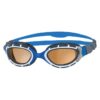
This is a polarised open-water goggle. The listing describes flexible points in the frame and a soft gasket, and says the polarised lens is meant to reduce eye strain in bright light. It suits swimmers who race or train mid-morning in strong sun. Skip it if you mostly swim at dawn or in grey conditions, where a polarised lens can feel dark.
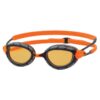
This is the polarised version in the Regular Profile Fit. The listing says it uses a softer gasket and that a smaller fit is also made. It suits adults with average to larger faces who want one sunny-day pair for ocean and outdoor pools. Narrower faces should look for the smaller fit instead.
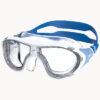
This is a mask rather than a goggle. The listing describes a curved lens for a wider field of view, a soft silicone skirt, a split strap and a push-button adjuster. It suits newer ocean swimmers and anyone who finds goggles press on their eye sockets. Skip it if you want a low profile for racing. A mask is bulkier and can catch more water when you turn your head to breathe. Check the listing for lens tint options.
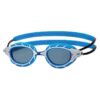
This is the standard Predator, a goggle that works in both the pool and open water. The listing mentions UV protection, an anti-fog treatment, a double strap with a quick pulley adjuster, and Regular and Smaller Profile Fit sizes. It suits swimmers who want one goggle for squad and the beach. If you need glare control, check the listing for which lens tint you are buying.
A bright silicone cap
A cap in a bright colour is the simplest piece of safety gear you own. Orange, yellow and pink show up against blue-green water far better than black or navy. Many organised swims issue a coloured cap for your wave, so bring your own for training and warm-ups.
In cold water, some swimmers wear two caps, or one cap pulled over ear plugs, for extra warmth. Comfort varies, so try it at a training swim before race day. You can see the options in our swim caps hub.
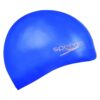
This is a moulded silicone cap, which grips better and lasts longer than latex. The listing describes a 3D shape for a snug fit and a pearlescent finish. It suits adults wanting a durable training and ocean cap. Check the listing for bright colours. Skip it if a moulded cap feels too tight, or if you have very long or thick hair and need a larger-volume cap.
Ear plugs and nose clips
Both are optional. Some swimmers find ear plugs make cold water more comfortable and reduce dizziness, while others dislike the muffled sound. Ear plugs are a personal choice. If you have ear problems, grommets or a history of infections, ask your doctor before using them.
Nose clips help swimmers who get salt water up the nose during choppy breathing or tumble turns at the start. The full range is in our accessories hub.
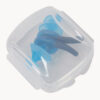
The listing says these are shaped to the ear canal, marked L and R, and clip together so they float if you drop them. That last feature is handy on sand or in the shallows. They suit swimmers who feel the cold in their ears. Skip them if your doctor has advised against ear plugs.
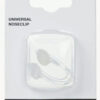
The listing describes soft silicone pads, a nylon frame that holds its shape, and a reusable case. It suits swimmers bothered by salt water in the nose. Skip it if you rely on breathing out through your nose underwater and don’t want to retrain that habit.
Anti-fog drops and lens cleaner
Factory anti-fog coatings wear off with time. Drops restore clear vision on older goggles and masks, and they clean off salt and sunscreen smears too.
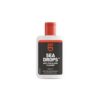
This is a combined cleaner and anti-fog, and the listing is written for dive masks. It says you apply it, rub, rinse and wear, and that it won’t damage silicone or rubber. It suits swimmers whose goggles or masks fog once the factory coating has worn. Skip it on brand-new pairs, because rubbing a fresh coating can shorten its life.
Ocean swim wetsuit: yes or no?
As a rule of thumb, many swimmers go without a wetsuit when the water is above roughly 20 degrees. Below that, a wetsuit adds warmth and buoyancy. Tolerance varies widely, though, and a lean swimmer may want neoprene in water that others swim in comfortably.
Wetsuit rules differ between events and between categories within an event. Some ban wetsuits above a set temperature, and some run separate wetsuit divisions. Always check your event’s current rules rather than assuming.
For thickness, you will see notation like 3/2, which means a 3mm torso and 2mm limbs. Our wetsuit guide covers thickness in more detail, and our wetsuits hub lists what is available. To be clear, our catalogue does not currently include swim- or triathlon-specific wetsuits. Surf wetsuits restrict shoulder movement more and are not ideal for freestyle.
Tow float or swim buoy
A tow float clips to your waist and trails behind you. It makes you more visible to boats and other water users, and you can hold it to rest briefly. It is not a lifesaving device and will not keep you safe in trouble.
Our catalogue does not list a tow float at present. If you want one, check the retailer’s own range.
A swim vest is not a tow float
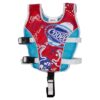
This is a swim vest, which is a different item from a tow float. The listing describes it as a floating vest for building water confidence, so check the listing carefully for the intended wearer, sizing and use before you buy. It may suit families looking for a confidence aid during supervised water time. Skip it as ocean swim gear for events or training: it is not a tow float and not a substitute for supervision.
Chafe and sun protection
Salt water and repeated arm strokes rub the neck, armpits and any strap lines. Many swimmers use an anti-chafe balm on these areas, especially under a wetsuit collar. Choose a product that won’t degrade neoprene if you wear a wetsuit.
Apply water-resistant sunscreen well before you swim so it doesn’t smear onto your lenses. Keep it off your forehead just above the goggles. Cover up between swims.
Open-water swimming gear compared
| Product | Type | What the name or listing tells you | Currently from |
|---|---|---|---|
| Zoggs Predator Flex Polarized Ultra | Goggle | Polarised lens, flexible frame, soft gasket | $56.00 |
| Zoggs Predator Polarized Ultra (Regular) | Goggle | Polarised lens, regular fit, soft gasket | $69.99 |
| Speedo Biofuse 2.0 Mask | Mask | Curved wide lens, split strap, push-button adjust | $59.99 |
| Zoggs Predator | Goggle | UV protection, anti-fog, two fit sizes | $30.80 |
| Speedo Plain Moulded Silicone Cap | Cap | Moulded silicone, 3D shape | $10.00 |
| Speedo Biofuse Earplug | Ear plugs | L/R marked, clip together, float | $16.00 |
| Speedo Universal Nose Clip | Nose clip | Silicone pads, case included | $11.00 |
| Gear Aid Sea Drops 37ml | Anti-fog | Cleaner and anti-fog, aimed at masks | $13.95 |
| Cooee Swim Vest | Swim vest | Floating vest; not a tow float | $44.99 |
Pre-swim checklist
- Check conditions, surf reports and beach flags. Swim between the red and yellow flags where they are up.
- Swim with others, or join organised ocean swims and club open-water sessions. If you train alone, tell someone your route and return time.
- Pick sighting landmarks before you enter, such as a building, headland or tree line.
- Learn to spot rips in general terms. Look for darker, calmer-looking channels with fewer breaking waves. Follow lifeguard advice every time.
- Pack two pairs of goggles for different light, a bright cap, anti-fog, sunscreen and anti-chafe balm.
After the swim: rinse and storage
Rinse goggles, caps, ear plugs and any wetsuit in fresh, cool water as soon as you can. Salt and sand break down silicone and seals.
Let goggles air-dry out of direct sun, then store them in a case so the lenses don’t get scratched in your bag. Dry silicone caps fully before folding them away.
Frequently asked questions
Do I need a wetsuit for an ocean swim?
Not always. As a rule of thumb, many swimmers go without a wetsuit when the water is above roughly 20 degrees. Cold tolerance varies, so lean or newer swimmers may still want one. Event rules differ: some ban wetsuits above set temperatures, and others run separate categories. Check your event’s current rules. If you buy one, choose a swim-specific suit rather than a surf suit, because surf suits restrict your shoulders.
What goggles are best for ocean swimming?
The best ocean swim goggles are the ones that seal on your face with a wide enough view for sighting. Polarised, mirrored or smoke lenses suit bright sun. Clear or lightly tinted lenses suit dawn and overcast sessions. A mask gives an even wider view and suits swimmers who find goggles uncomfortable. Test the fit by pressing the goggles to your face without the strap.
Do I need a tow float for open-water swimming?
It is strongly worth considering for training swims outside organised events. A tow float makes you more visible to boats and lets you rest briefly. It is not a lifesaving device and does not replace swimming with others. Our catalogue does not list a tow float at present, so check the retailer’s own range. A swim vest is a different product and not a substitute.
How do I stop my goggles fogging in the ocean?
Don’t touch or wipe the inside of the lenses, because rubbing can wear down the anti-fog coating. Rinse your goggles in seawater just before you start. Once the factory coating fades, use anti-fog drops as the product directs. Rinse in fresh water after each swim and store your goggles dry in a case. If a pair keeps fogging despite all this, it may be time to replace it.